If you are stopped on suspicion of drunk driving, you may be asked to take a roadside breath test. Many people wonder if they can refuse and what happens if they do.
Speaking with a Criminal Defense lawyer Dayton drivers rely on can help you understand your rights and risks. The choice to refuse or comply can affect your case in serious ways.
What Is a Roadside Breathalyzer?
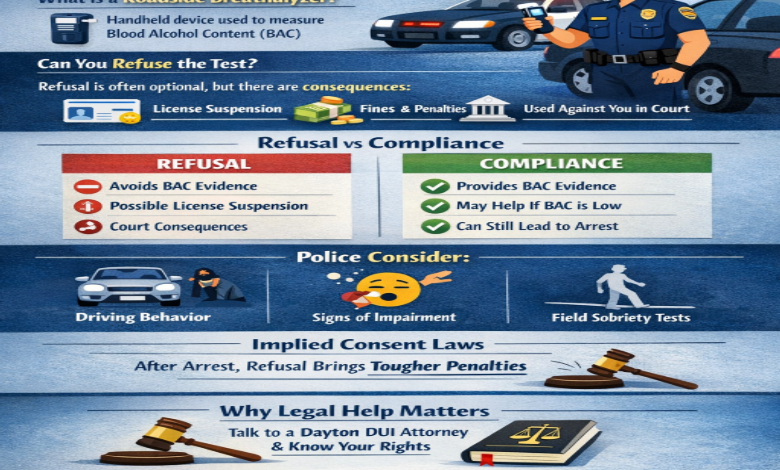
A roadside breathalyzer is a handheld device used by police. It measures your blood alcohol content (BAC) at the scene.
This test is different from the official test done at the station. The roadside test is often used to help an officer decide whether to make an arrest.
Is the Roadside Test Mandatory?
In many cases, roadside breath tests are considered preliminary. This means you may have the option to refuse.
However, refusal does not mean there are no consequences.
What Happens If You Refuse?
Refusing a roadside breathalyzer can lead to immediate and long-term effects. Laws vary by state, but common outcomes include:
- License suspension
- Fines or penalties
- Use of refusal as evidence in court
Implied Consent Laws
Most states follow implied consent laws. By driving, you agree to chemical testing if lawfully arrested.
Refusing a chemical test after arrest can bring stronger penalties than refusing a roadside test.
What Happens If You Comply?
Taking the test may seem like the easier choice. But it also comes with risks.
If your BAC is over the legal limit, the result can be used against you in court.
When Compliance May Help
In some cases, a low BAC result may support your defense. It may also prevent further suspicion at the scene.
Still, even a small reading can lead to more testing or arrest if other signs of impairment are present.
Refusal vs Compliance: Key Differences
Understanding the trade-offs is important before making a decision.
Refusal
- May avoid giving immediate BAC evidence
- Can lead to license suspension
- May be used against you in court
Compliance
- Provides direct BAC evidence
- May help if results are low
- Can still lead to arrest depending on the situation
Each option has pros and cons. There is no one-size-fits-all answer.
How Police Use Your Decision
Your choice, and your behavior, both matter. Officers look at the full situation, including:
- Driving behavior
- Physical signs of impairment
- Field sobriety test results
- Your statements at the scene
Even without a breath test, police may still have enough reason to arrest.
Why Legal Guidance Matters
Deciding whether to refuse or comply can affect your case from the start. A mistake in the moment can lead to serious consequences later.
An experienced attorney can review:
- Whether the stop was lawful
- How the test was requested
- If your rights were respected
Protecting Your Future
DUI-related charges can affect your license, finances, and record. Early legal advice can help you understand your options and build a strong defense.
Make an Informed Decision
Refusing a roadside breathalyzer is not always simple. It may limit evidence, but it can also bring penalties.
Complying may seem safer, but it can provide direct proof against you.