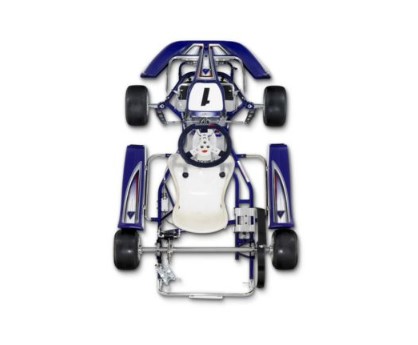
When it comes to achieving performance and consistency on the track, understanding your kart chassis is just as important as having a powerful engine or the right tyres. The chassis acts as the backbone of the kart, directly affecting handling, cornering, weight distribution, and ultimately, your lap times. Whether you’re a seasoned driver or new to karting, knowing which measurements matter can help you fine-tune your setup and gain a competitive edge.
This guide breaks down the most crucial kart chassis dimensions you need to be aware of and explains how they influence performance and drivability.
Wheelbase
The wheelbase is the distance between the front and rear axles. A longer wheelbase generally provides more stability, particularly at high speeds, while a shorter wheelbase allows for quicker turning and improved manoeuvrability in tighter corners.
Most racing karts have a wheelbase between 1010 mm and 1050 mm. Adjusting this distance even slightly can alter the kart’s responsiveness, so it’s a key measurement to monitor when tweaking your setup for different track layouts or driving styles.
Front and Rear Track Width
The front and rear track width refers to the distance between the centre points of the tyres on each axle. Widening the front track usually results in better turn-in and less understeer, while narrowing it can increase responsiveness but reduce stability. The rear track width, on the other hand, influences traction and rear-end grip.
Precision is crucial when making these adjustments, as a few millimetres can make a noticeable difference in how your kart reacts during acceleration and cornering.
Chassis Height (Ride Height)
Ride height is the distance between the bottom of the chassis and the ground. Altering the chassis height changes the kart’s centre of gravity. Raising the chassis increases weight transfer and grip, which can be useful in wet conditions, while lowering it improves stability and reduces body roll, ideal for dry and grippy tracks.
It’s important to keep the height balanced front-to-rear to maintain predictable handling characteristics.
Torsion Bar Settings
Torsion bars are often overlooked, yet they play a vital role in chassis flex. Adjusting or removing torsion bars changes the stiffness of the chassis, which affects how weight is transferred during braking, cornering, and accelerating.
A stiffer setup will provide a more immediate response but may result in less grip on uneven or slippery surfaces. Conversely, a more flexible chassis improves grip and comfort but may sacrifice responsiveness.
Seat Position
While not a chassis dimension in the strictest sense, seat position significantly impacts weight distribution. A seat mounted too far forward or backward can unbalance the kart, leading to either understeer or oversteer.
Most manufacturers offer recommended seat placement guidelines for different driver weights and heights, but small adjustments can still make a big difference. Measuring and logging the seat’s height, distance from the front axle, and tilt angle can help maintain consistency and optimize your setup for varying conditions.
Axle Length and Diameter
The rear axle is central to rear grip and kart responsiveness. Axle lengths vary depending on chassis type, but the diameter typically ranges from 30 mm to 50 mm. Thicker axles offer more stiffness and are suited to high-grip conditions, while thinner axles flex more, offering better grip in slippery or low-grip environments.
Ensuring your axle is straight and properly aligned with the chassis is essential to avoid uneven tyre wear and unpredictable handling.
Importance of Frame Symmetry
Over time, heavy impacts or aggressive kerbing can bend the chassis, affecting its symmetry. Even the most subtle twist can throw off your kart’s balance and handling. Regularly measuring the diagonal distances from identical points on each side of the chassis can help ensure it remains square and true.
If irregularities are detected, a chassis jig or professional straightening service may be needed to restore performance.
Sourcing the Right Components
To maintain or upgrade your chassis, it’s essential to use high-quality parts from trusted suppliers. When looking for replacement or custom components, karting enthusiasts often turn to reliable platforms offering kartparts UK. A dependable supplier can make the difference between a kart that performs consistently and one that struggles to stay competitive.
From torsion bars and stub axles to seat brackets and bearings, ensuring each component is tailored to your chassis specs is key to keeping your setup race-ready.
Conclusion
A kart’s performance is deeply influenced by the precision and balance of its chassis. From wheelbase and ride height to axle stiffness and seat positioning, each measurement plays a specific role in how your kart behaves on the track. By regularly checking and adjusting these dimensions, you’ll not only protect your investment but also extract the maximum performance from your setup. Whether you’re racing competitively or just enjoying the thrill of karting, understanding your kart chassis is a crucial step toward success.



